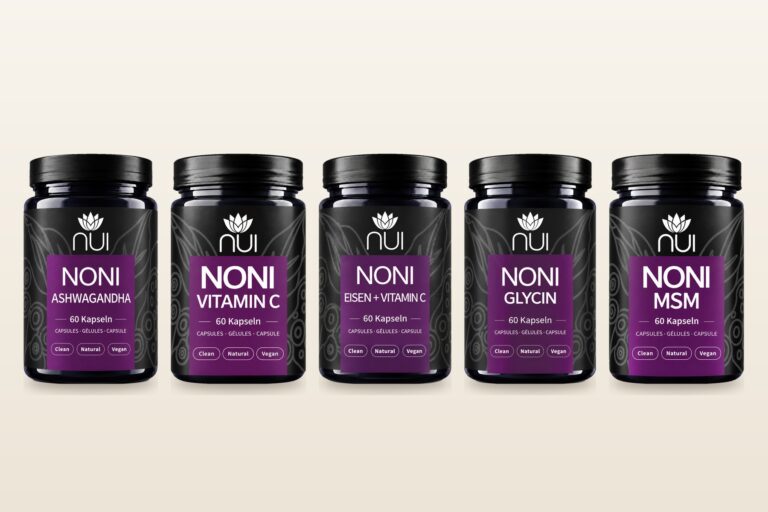
Glycine is the smallest of all amino acids and one of the most common in the human body. NUI NONI Glycin provides 9,500 mg of glycine obtained through fermentation per daily serving – complemented by 500 mg of noni fruit powder from the South Seas. Two ingredients. Nothing else.
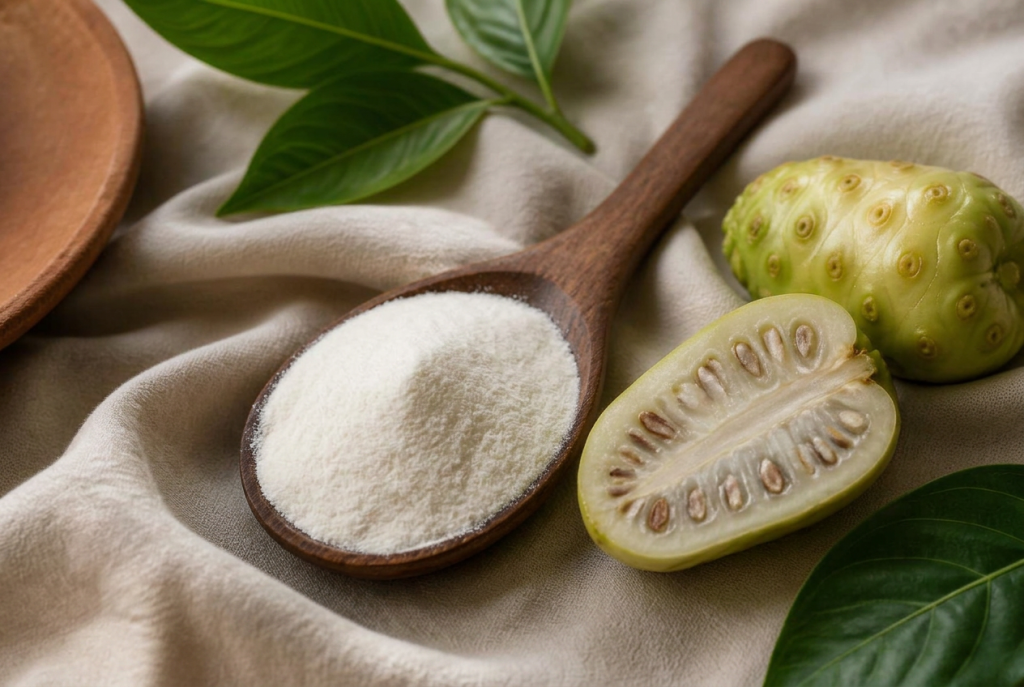
In short: Glycine is the smallest of all amino acids and at the same time one of the most common in the human body. NUI NONI Glycin provides it in a particularly pure form: 9,500 mg of L-glycine obtained through fermentation per daily serving, complemented by 500 mg of noni fruit powder from the South Seas – and nothing else.
What is an amino acid?
Amino acids are the basic building blocks of protein. Chains of amino acids fold into proteins – the building material of practically every tissue. The body works with around 20 amino acids: it takes in some through food and produces others itself. In principle, the body can produce glycine itself.
What is glycine?
Glycine is the smallest and simplest of all amino acids and at the same time one of the most common in the body. Its name derives from the Greek word for “sweet” – glycine tastes slightly sweet and is very soluble in water. In practice, this means: fine, subtle in taste and easy to stir in.
Where is glycine found?
- In the body – especially in connective tissue and in collagen-rich structures such as skin, tendons and cartilage.
- In food – in protein-rich foods, with particularly high amounts in collagen-rich animal products such as gelatine, and less in pulses.
NUI NONI Glycin provides glycine in a purely plant-based form: obtained through fermentation, entirely without animal-derived raw materials.
What role does glycine play in the body?
Glycine is well researched in biochemistry: as a basic building block of proteins, it is an integral component of collagen.
Important: This is general textbook knowledge about the substance – not a promise of any effect of our product. There is no EU-authorised health claim for glycine.
NUI NONI Glycin: just two ingredients
Per daily serving (2 scoops = 10 g):
- 9,500 mg of pure L-glycine (obtained through fermentation)
- 500 mg of noni fruit powder from the South Seas
No flavouring. No sweeteners. No bulking or anti-caking agents. One pouch (300 g) lasts for around 30 days. Stir in, done.
NUI NONI Glycin – 300 g
9,500 mg pure L-glycine + 500 mg noni fruit powder per daily serving.
Two ingredients. Vegan · made in Austria.
€ 25,50
Fermentation-derived and vegan
Our glycine is obtained through fermentation – a natural fermentation process, entirely without animal raw materials. The result: high purity, good solubility, resource-saving production. 100 % vegan.
Why noni from the South Seas?
More than 152 different natural constituents have been described in the noni fruit – from vitamins and minerals to trace elements and secondary plant compounds. This diversity is what makes it so valuable.
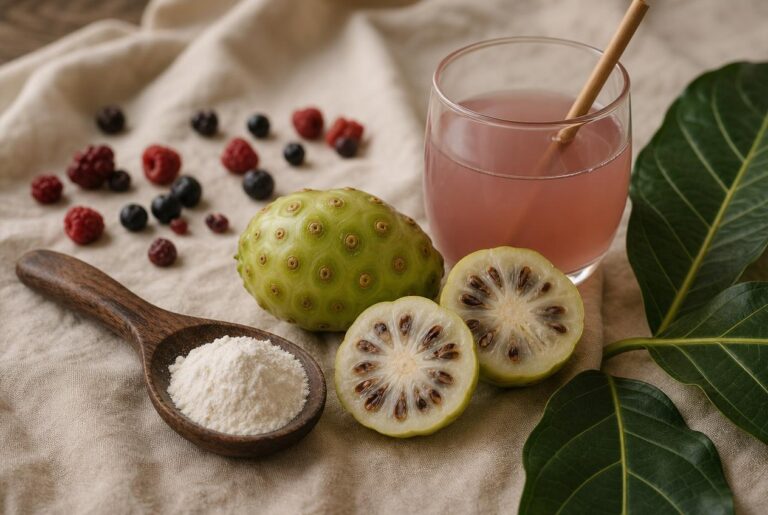
We complement the pure glycine with 500 mg of sun-dried noni fruit powder of certified origin from the South Seas. This way you get both in one product: the pure amino acid and the characteristic plant matrix of the noni fruit.
How to use
2 scoops (10 g) a day stirred into a drink of your choice – for example into a large glass of water (approx. 250 ml), into juice or into a meal. Not suitable for children and adolescents. Do not exceed the recommended daily dose. Food supplements are not a substitute for a varied diet.
Why a pouch instead of a jar?
We did the maths: the plastic lid of our former large jar alone weighed 19 g – more than the entire new pouch (11 g). The new stand-up pouch has been tested for recyclability as “Made for Recycling” (Interzero). Less material, less transport damage – with the same quality.
Our stance: facts, not promised effects
There is no EU-authorised health claim for glycine – so we don’t make one. Instead, we tell you exactly what is inside, how much and how it is made. Minimal. Honest. Transparent.
Frequently asked questions (FAQ)
What is glycine?
The smallest of all amino acids and one of the most common in the human body. Glycine is a basic building block of protein and an integral component of collagen.
Where is glycine found?
In the body, mainly in connective tissue and in collagen-rich structures (skin, tendons, cartilage), and in protein-rich foods – especially in collagen-rich animal products.
How much glycine does a daily serving contain?
9,500 mg of pure L-glycine plus 500 mg of noni fruit powder per daily serving (2 scoops = 10 g). One 300 g pouch lasts for around 30 days.
Is NUI NONI Glycin vegan?
Yes. The glycine is obtained through fermentation, entirely without animal-derived components. Vegan · made in Austria.
Why doesn’t NUI make any claims about the effects of glycine?
Because there is no EU-authorised health claim for glycine. We only communicate what is legally permitted – and instead give you transparent facts about composition and production.
Two ingredients. Nothing else.
9,500 mg pure glycine + 500 mg noni fruit powder from the South Seas.
Fermentation-derived, vegan, made in Austria.
€ 25,50
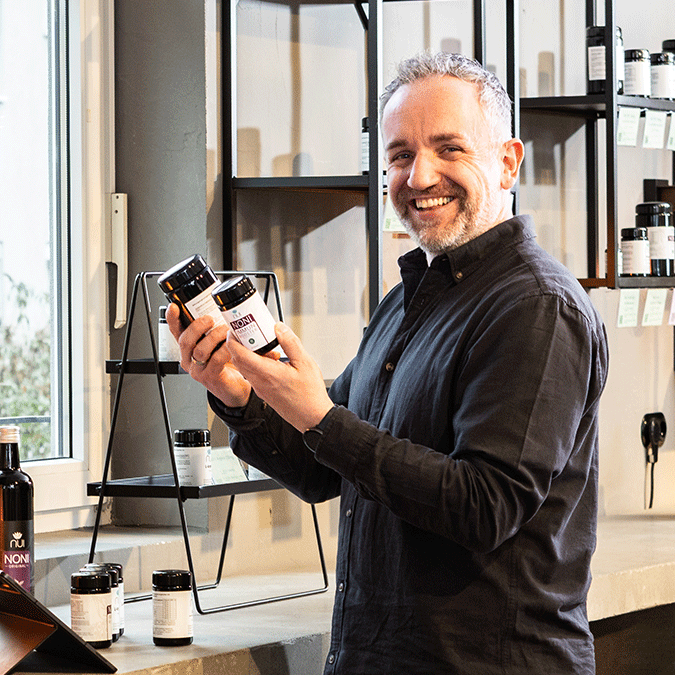
Enrico Mandl
Enrico Mandl is a committed health visionary with almost two decades of experience in supporting people holistically. His work combines in-depth knowledge of nutrition and plants with a keen sense for personal development.